

My Kids Vision

Myopia in young adults.

Childhood-onset myopia typically stops progressing between the ages of 18 and 21. At this age, your young adult child’s eyes are likely to remain at the same or similar prescription, although around 40% of young adults still experience changing vision in their 20s. Even if your child has had perfect vision throughout their childhood, myopia can develop in early adulthood, typically brought on by environmental factors such as too much close work or not spending enough time outside.

Let’s take a look at myopia in young adults, and how to minimise progression of the condition.
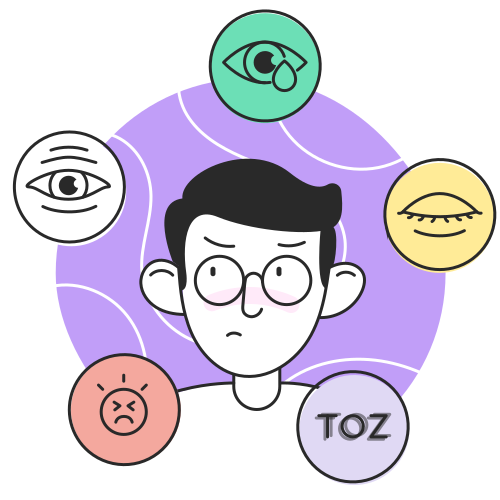
Symptoms of myopia in young adults.

Young adults will likely be aware of any changes to their vision, and may be able to book their own eye test to check their symptoms.

Some of the common symptoms of myopia in young adults include:

  • Complaining of blurry vision
  • Holding objects close to their face
  • Sitting very close to screens
  • Squinting or closing one eye to see better
  • Frequent eye rubbing
  • Excess blinking
  • Watery eyes
  • Frequent headaches

If any of these symptoms are present, or your young adult child mentions that they are struggling to focus on distant objects or read signs, encourage them to book an appointment with an eye care professional. This is especially important if they drive.
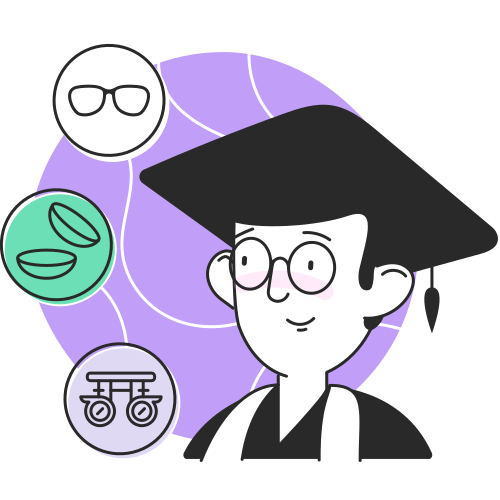
Managing myopia in young adults.

While it’s hard to manage the lives of your young adult children, especially if they have left home, it’s important to make sure that they are aware of their myopia, its causes and complications.

Young adults with myopia will need spectacles or contact lenses to see clearly. Standard types of spectacles and contact lenses will correct their blurred far vision but won’t slow down the worsening of myopia. While special types of spectacles and contact lenses are available that both correct vision and also have the specific ability to slow down the progression of myopia, there is little scientific evidence for their effectiveness in young adults. Atropine eye drops have been shown to slow progression of myopia in children and teens, but there is no evidence of this in young adults.

For young adults with myopia that is continuing to progress, their eye care professional can discuss the suitability of these special types of spectacles or contact lenses. For young adults with stable myopia, regular eye care appointments are necessary to monitor the condition, check that the current prescription is suitable, and examine the health of the eyes.

Knowledge Centre Risk Assessment

Age-specific content for young adults with myopia.

Take a look at the articles below for further information about myopia in young adults, or head to our knowledge centre for more insights and support.

 All about the 20-20-20 rule for tackling eye strainVisual environmentScreen time All about the 20-20-20 rule for tackling eye strainPeople are spending more time on electronic devices than ever before. The 20-20-20 rule is a simple eye exercise to relax the eyes from prolonged screen use.Read full article How do glasses lenses correct vision?SpectaclesGlassesHow do glasses lenses correct vision?Myopia and astigmatism are common vision conditions in children. Glasses can adjust how light enters the eye, allowing images to focus clearly on the retina. Prescription lenses help focus light accurately inside the eye so that people with myopia, hyperopia, or astigmatism can see clearly.Read full article Corneal topography: what to expectExamination processesCorneal topography: what to expectCorneal topography is an imaging test that is used to map the shape and curvature of the cornea – the clear, front surface of the eye.Read full article Axial length measurement: what to knowAxial lengthAxial length measurement: what to knowAxial length is the length of the eye from the front to the back, and is a key measurement of the eyeRead full article Sunglasses and sun protection for children's eyesOutdoor timeEye healthSunglasses and sun protection for children's eyesHow to keep your child safe in the sun with simple tips on sunglasses, hats, shade, and healthy outdoor habits.Read full article Inside your eye exam: eye drops for vision testingEye healthInside your eye exam: eye drops for vision testingAccommodation allows the eye to adjust vision for different distances. Eye drops which relax accommodation can assist in verifying the eye’s prescription.Read full article LASIK and other types of eye surgery for myopiaEye healthLASIK and other types of eye surgery for myopiaLASIK is a laser eye surgery to correct myopia, hyperopia and astigmatism. This surgery helps people to see clearly without glasses or contact lenses.Read full article What is ortho-k? Parents' guideOrtho-kWhat is ortho-k? Parents' guideOrtho-k contact lenses gently flatten the cornea during sleep to create a temporary way of correcting vision that is reversed when wear is stopped.Read full article What is atropine? Parents' guideAtropineWhat is atropine? Parents' guideAtropine has been used in medicine since the 1800's. For eye care it has gained recent attention for its ability to slow progression of myopia in children.Read full article 
Read more about young adult myopia

Join the discussion.

Our social media channels offer a supportive community for those helping their children to manage myopia. It’s a safe, friendly space for parents to access useful resources, ask questions, and share their own experiences with others.

An unhandled exception has occurred. See browser dev tools for details. Reload 🗙